
Fall Protection on Roofs – Safety for You and Your Team
Fall protection on roofs prevents serious accidents when working at heights on a roof. Whether you’re a roofing contractor, a sheet metal worker, or responsible for property management, it’s your responsibility to ensure that the regulations are followed.
If you have people working on the roof, it’s your responsibility as an employer to ensure that the equipment is in working order. If you’re working up there yourself, you have the same responsibility toward yourself.
Mul10 ProSafe is one of the country's leading suppliers of quality-assured fall protection systems for roof structures, developed and manufactured in Denmark.
What does fall protection on a roof entail?
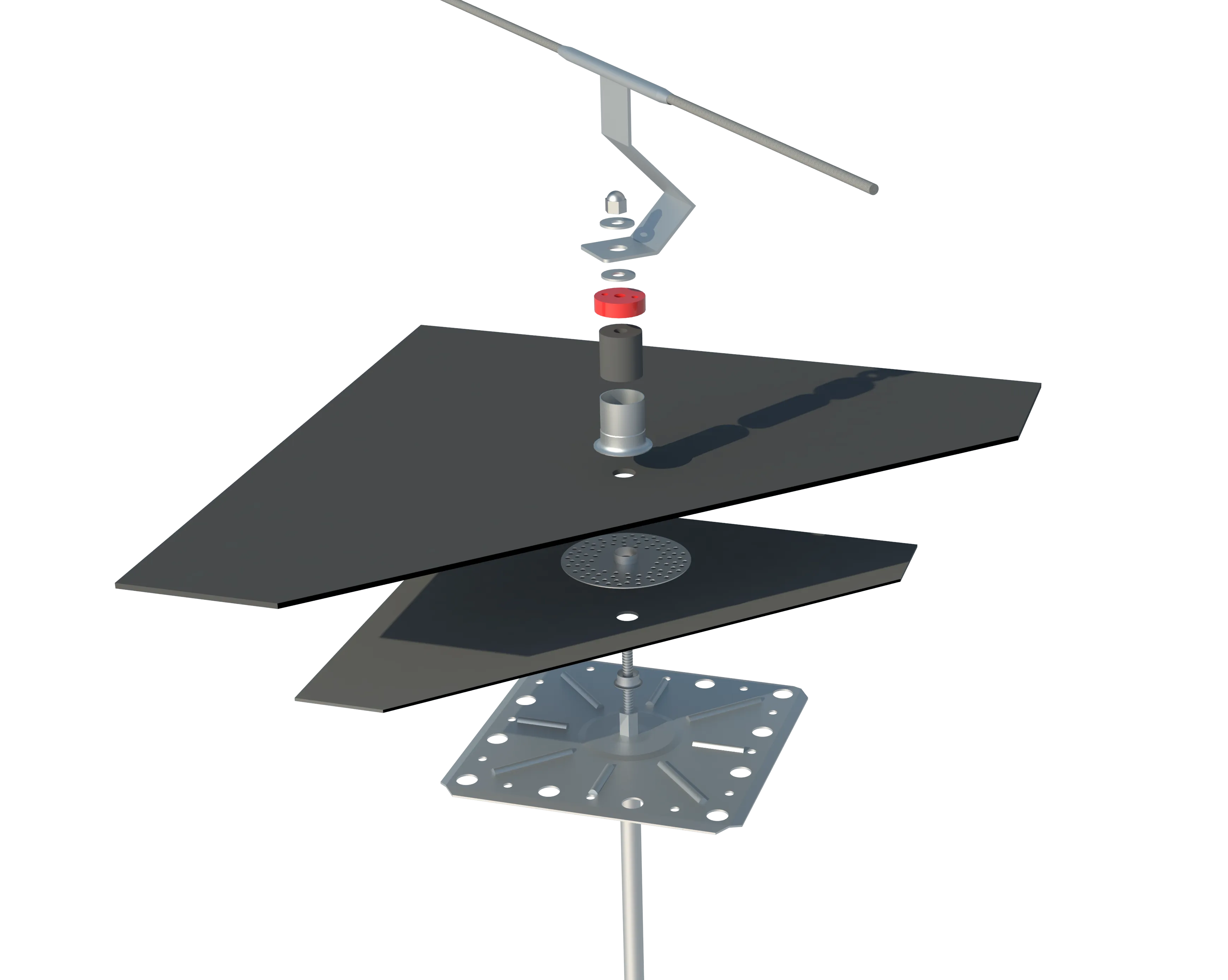
Fall protection on a roof involves an anchoring system to which you attach yourself using a rope and a fall protection harness, so that you are secured if you lose your balance or take a wrong step.
The system must be able to support your weight, and the anchor points must be positioned so that you don’t risk swinging into anything during a fall—if they’re positioned incorrectly, you could end up hitting a wall or the edge of the roof instead of simply hanging safely from the rope.
That’s why it’s not enough to just have the equipment. It must also be set up correctly before you begin.
When should you use fall protection when working on a roof?
The fall protection requirement takes effect as soon as you are working at a height of more than 2 meters where there is a risk of falling.
On flat roofs, there is a threshold between 2 and 3.5 meters where a written risk assessment is sufficient. However, if the fall height exceeds 3.5 meters, you must use personal fall protection or a collective fall protection system.
Before you go up on the roof, you should therefore know how high you’ll be working and whether there are already anchor points that meet the requirements. If there aren’t any, it’s the employer’s responsibility to ensure that the equipment is in place and that your employees are trained to use it properly.
.webp)
Have you seen the new standard for permanent fall protection?
The long-awaited European standard EN 17235:2024 is now a reality.
What do the regulations say about fall protection on roofs?
The fall protection regulations are issued by the Danish Working Environment Authority and set requirements regarding height and equipment. The equipment must be CE-marked and inspected once a year, for the safety of both you and your employees.
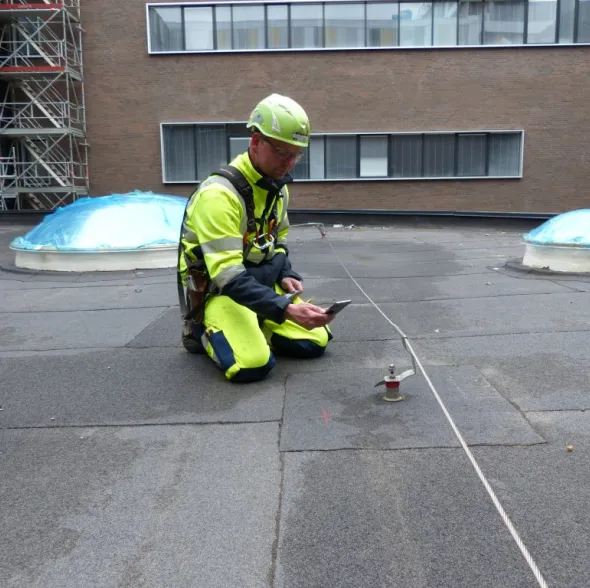
At Mul10 ProSafe, we document the inspection using a QR system so that you and the building owner can always see the status. If you choose a permanent fall protection system, it is the latest standard, EN 17235:2024, that sets the requirements.
Following fall protection rules keeps you and your team safe.
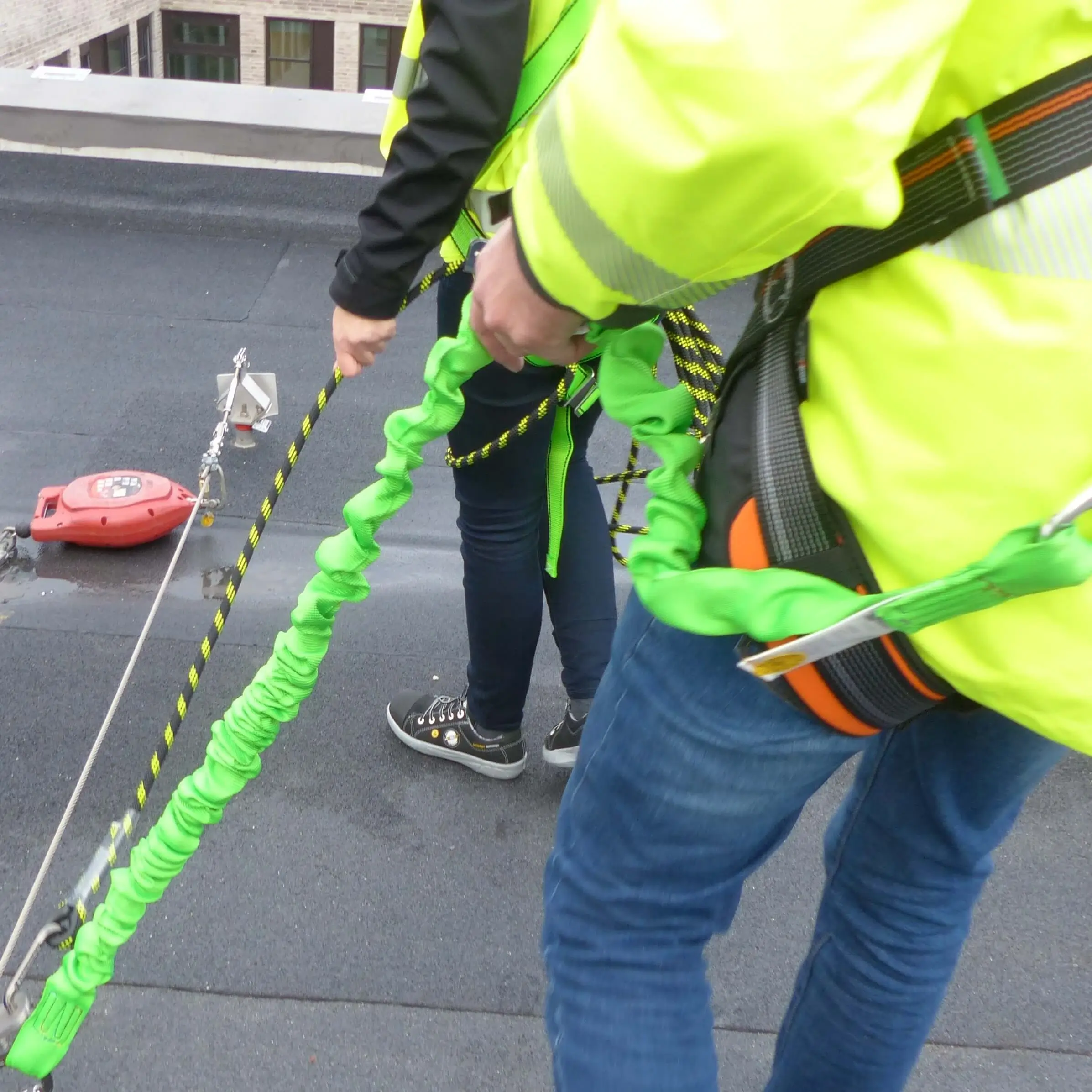
How do you choose the right fall protection equipment?
The right fall protection equipment depends on whether you’re starting from scratch or just need a few additional parts. If you’re starting from scratch, a fall protection kit is often the easiest option—it bundles all the parts you need into one package. If, on the other hand, you just need to supplement or upgrade what you already have, you can browse our entire selection of fall protection equipment and choose individual parts as needed.
If you have any questions about the installation, a certified Mul10 PROSAFE installer can set up the system for you to ensure that the anchors are properly secured from the start.
How to Get Started with Fall Protection for Your Roof
Whether you have a specific roofing project or are in the process of assessing the requirements for an upcoming project, Mul10 ProSafe can help you find the right system for your roof.
We have been developing and manufacturing fall protection solutions at our own factory in Denmark since 2000, and that experience is incorporated into every solution we deliver.
Get in touch with us, and we'll go over the task together.





Frequently asked questions
Do you need fall protection even if the work on the roof only takes a short time?
Fall protection is also required for short tasks. It is the height and the risk of falling that determines it, not how long you are on the roof. If you just need to check a gutter or replace a single panel at a height of 3 meters, the protection must still be in place before you go up there. Many accidents happen precisely during quick tasks, where fall protection is not chosen because the task seems too small to be worth the effort.
Do the rules for fall protection apply to pitched roofs?
The rules for fall protection also apply to pitched roofs, just as they do to flat roofs, but the limits are different. On a pitched roof with a slope of more than 15 degrees, there must be protection from a height of 5 meters, while the requirement for flat roofs already applies from 2 meters. Below these limits, a risk assessment must still be made so that you know whether additional protection is needed anyway.
What is used for fall protection on flat roofs?
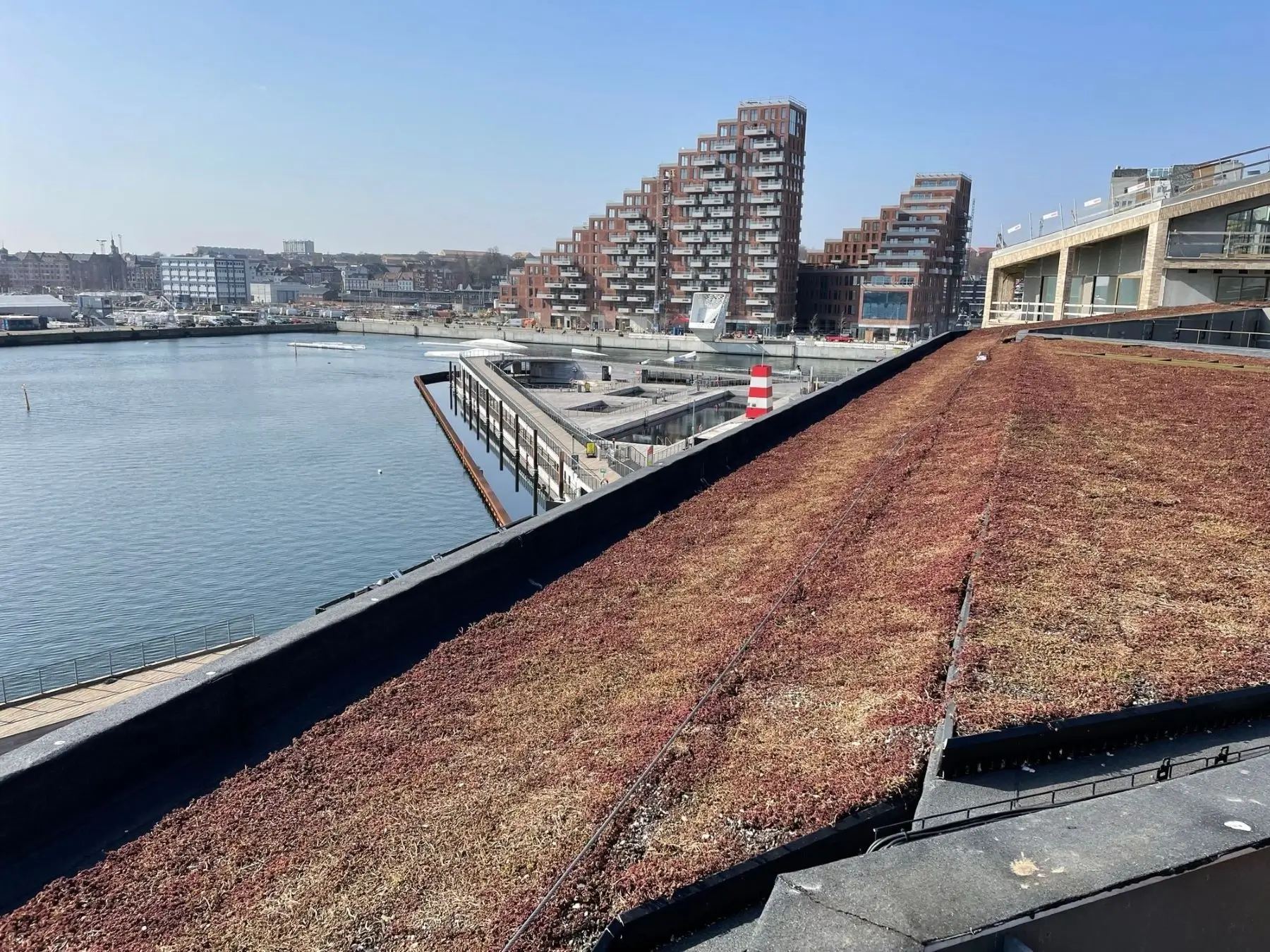
For fall protection on flat roofs, use Mul10 ProSafe's fall protection - a system with posts that you attach yourself to. The system is patented, and the posts can be placed up to 10 meters apart. It is waterproof, so it does not create leaks in the roof, and the anchorage is made of stainless steel AISI 316, tested by the Danish Technological Institute.
What should a roof fall protection kit contain?
A roof fall arrest kit should at least include a harness, a fall arrester, a carabiner and a line or connector that is tested and CE marked. In addition to the kit itself, as an employer you should also have a contingency plan ready so that you know how to get someone down safely if an accident occurs.
Sign up for our newsletter
and get updated on new products, regulations, prices and more.

